US
US CA
CA LE
LE


 Compare Rifles


A break-in happens every 26 seconds in America. Nearly 28% of them happen as families are still at home. Most parents have never actually sat down with their kids to talk about what they should do if somebody breaks in. Fire drills are just a part of life now. Security drills aren't though. Parents just continue to delay that conversation because it feels too scary or too heavy to bring it up with the kids.
Kids need practice with these situations, or they just freeze up when something bad happens. Adults are the same way. You can mentally map out each escape route that you want. But when the panic kicks in, your own hallway suddenly seems unfamiliar. You can write a plan down somewhere. But actually pulling it off when your heart is pounding and you can't think straight is something else completely. Those few extra seconds can make all the difference.
A six-year-old needs different strategies than a teenager who comes home to an empty house after school every day. Code words might work great for your ten-year-old. But your preschooler won't have any idea what you're talking about. Safe rooms in apartments work nothing like the safe rooms in a big two-story house with multiple exits.
Let's talk about a security plan that your family can pull off effectively - even when everyone's scared and it's in the middle of the night.
Table of Contents
Code Words and Signals for Family Safety
Your family might know all of the best hiding places and escape routes in your house. None of that matters if you can't warn one another about danger. A code word lets you communicate without an intruder catching on. One Phoenix family proved this back in 2013. They'd taught their child a code word months earlier, and it saved the day when a stranger tried to pick them up from school with a fake emergency story.
The code word that you choose should sound normal enough in conversation, but different enough that nobody would say it accidentally. An old street name can do the job, or maybe the name of a restaurant from your hometown that closed years ago. Whatever you pick needs to stick in your youngest child's memory as it stays unusual enough that it won't pop up at the dinner table. Practice the word together every few weeks, just like you'd practice a fire drill.

Your children also need to know how to call 911 when they can't talk normally. Emergency dispatchers actually get particular training for whispered calls because they know that callers sometimes can't speak up. The best strategy is to teach your kids to whisper their home address first, then to ask for help. Practice these steps on an old phone that's not connected to anything.
Every family member needs to know where to go when there's an emergency. You need two different meeting places that everyone can remember. Inside the house, maybe everyone goes to the master bedroom. Outside, you might meet at the mailbox or in your neighbor's driveway. These locations need to be as familiar to your family as their own bedrooms.
Some family members might not be able to hear a verbal warning, so you'll need to have a backup plan for them. A specific pattern with the lights or a gentle tap on the shoulder can work just like any code word. Younger kids sometimes do better with simple instructions anyway.
Set Up Your Safe Room
Your family should have a safe room in the house for emergencies, and interior bedrooms or bathrooms tend to make the most sense.
These rooms are great because they don't have as much glass and fewer doors that anybody could break through. You want a room with a strong door that locks well. The room should also be as far as possible from any outside walls or windows because those are the most vulnerable parts of your home.
After you decide which room works best for your family, the next step is reinforcement. Those short screws that came with your door frame won't be of much help in an emergency. You want to replace them with 3-inch screws that actually anchor deep into the wall studs. A small upgrade can change your door's strength. Instead of a door that anybody could break through in 10 seconds, you now have one that might hold for a few minutes. Those extra minutes could save your family's life.

A safe room without supplies is an empty room, so you should stock it with necessities ahead of time. Flashlights with fresh batteries should be within arm's reach - extras are always good to have. A portable phone charger is very important too because you need to be able to call for help even if the power goes out in your neighborhood. Water bottles and a first-aid kit can fit without any problem in a small container that slides under the bed or tucks into a closet corner.
Kids can handle emergencies much better when they know just where to go and what they should do. The whole process becomes familiar and much less scary when everyone understands their role and has practiced it a few times.
Most homes just aren't built with safe rooms in mind, and that's normal. Your apartment or house might not have the perfect room for this type of setup. But you can still work with whatever space is available. Even a walk-in closet can become a solid temporary refuge if you set it up right. The whole point is to create distance and to put barriers between your family and anyone who might want to cause harm.
Practice makes the difference in an actual emergency. Your family should be able to reach the safe room fast and quietly from different parts of your house. Everyone needs to know the way to get there from their bedrooms, and you should also practice from the common rooms where your family usually spends time together.
Plan Your Family Escape Routes
Sometimes your best option during a break-in won't be to hide at all. It might be safest to leave the house, and everyone needs to know what they should do when those few seconds are ticking by. Evacuation routes can literally save lives. But most families never actually practice them for anything other than fires.
Go through each room in your house with everyone who lives there and find at least two ways to get out. Fire safety has probably prompted you to think about this already. But break-ins need the same level of preparation. The front door could be blocked, or an intruder could be standing right there. Your family needs to have backup options, and they need to know them well enough to use them without thinking. Almost 25% of all burglars actually come through first-floor windows instead of doors. That old window you never bother to open could be your family's way out. Everyone in the house needs to know how to unlock and open every window without fumbling around. Night invasions also bring a whole different set of problems because you can't see anything.
Practice your escape routes in total darkness at least once or twice a year. Glow-in-the-dark tape along the baseboards and door frames gives everyone a way to find their way without flipping on lights that would tell an intruder right where you are.

Two-story homes need some extra planning since nobody wants to jump from a second-floor window unless they absolutely have to. A rope ladder in each upstairs bedroom makes sense for most families. Elderly relatives or family members with mobility challenges need routes that actually work for their situations, too.
Those toys and shoes that are scattered in the hallway turn into serious hazards when you're trying to move fast in the dark. Make sure your escape paths stay unblocked every day, and make checking the exits part of your nightly habit before everyone goes to bed.
Safety Lessons That Work for All Ages
Escape routes are topics every parent needs to talk about with their kids. But the conversation has to line up with their age and maturity level. You want to get them ready for emergencies, so it doesn't make them scared or worried about their own home.
Kids between three and seven years old do best when safety lessons feel like games. Child psychologists actually recommend this for a reason. You can make up simple stories about what they should do if a stranger knocks when you're not in the room. It's the same way that schools take with fire drills and lockdown procedures. Little kids need instructions that are simple and stick in their heads, and games help them remember what they should do.

Once your kids are between eight and twelve, role-playing exercises work well. You can act out different scenarios together, and this gives them a chance to practice what to say and do. Kids at this age are sharp enough to tell the difference between normal house sounds and unusual ones. The furnace has a particular sound when it turns on, and that's very different from footsteps in a room that should be empty. They need to learn these differences.
Your teenagers are ready for honest conversations about home safety. They're ready for the fact that roughly 38% of burglaries take place during the day. A lot of these happen in the afternoon when kids come home from school to an empty house. Teenagers are also mature enough for more specific instructions about which situations call for hiding and which ones mean that they need to get out fast.
Elderly family members who live in your home might need their own set of instructions. Their mobility and hearing can affect what strategies work best for them. The main point with everyone is gradual confidence-building. Nobody benefits from an information dump that leaves them feeling overwhelmed instead of prepared!
Try Drills for Your Family
Practice drills for home defense should happen about every three to four months if you want them to actually stick. Any more than that and everyone gets annoyed. But any less and everyone starts to forget the important parts. You want to build the same muscle memory that military and law enforcement teams use during their training. In the tactical world, we call it stress inoculation, and it's a technical term for practicing under mild pressure now so you don't fall apart when the real pressure hits.
Announced drills are the way to go when you're first helping your family get used to the emergency procedures. Pick a time and give everyone plenty of advance warning. Maybe on Wednesday, you can mention that Saturday at 2 o'clock would be a great time to go over the plan together. Everyone needs time to get their head around what's going to happen. After your family has practiced a few times and the process feels natural, unannounced drills become an option. Just be sure that everyone's on board with spontaneous practices before you start one. The whole point is to build confidence in your safety plan - not to create stress around it.

Practice needs to happen during the day and at night because they're different experiences. Your house is a whole different place in the dark, and everyone in your family needs to learn how to move around safely without turning on the lights as they go. You should time how long it takes for everyone to get to the safe room or wherever you've decided to meet outside. Families that practice regularly can usually get to safety twice as fast as they did the first time around - and it really matters when every second counts.
During these exercises, some patterns start to emerge. Some family members freeze up the second that the drill starts, even though they know the plan inside and out. Others will blank on what they're supposed to be doing the second they feel any pressure or urgency. This reaction is normal! It's just why practice matters. The brain needs repetition to override our natural freeze response.
After the drill is over, get everyone in the same room and talk about what just happened. Ask each person what parts felt manageable and which parts made them feel lost or confused. The path to your safe room might need some changes, or somebody might need more help with what they're supposed to be doing. Point out what went well and celebrate even the little victories. Practice should make everyone feel more capable - not worried. And a little praise helps everyone stay motivated for next time.
Smart Home Security for Your Family
Technology can change the way that your family deals with emergency drills - it all starts with the fundamentals. Door sensors and window alarms are probably the most underrated tools out there because they can buy you those extra seconds before an intruder actually gets inside your home. Studies have found that houses with security systems get broken into about 3 times less frequently than houses without them - it's a massive difference if you think about it.
Everyone who lives in your house should be able to hit that panic button without even having to stop and think about it. Most of the modern systems out there only take about 5 minutes to teach each family member how to use them. Also, newer systems can silently alert the police as they appear to shut down completely. If an intruder ever forces you to disarm your alarm, then this feature could literally save your life.

Backup power for all your security devices is really important because experienced criminals know to cut the main power before they do anything else. A simple battery backup will also keep everything running right when you need it to work. Doorbell cameras and motion sensors create an early warning network around your entire property. They'll alert you that someone's approaching long before that person reaches your door.
All this technology has to complement your family's physical response plan, though. Even the most expensive camera system is useless if your family doesn't know what steps they should take when an alert goes off. Privacy is another consideration when you're installing cameras and sensors throughout your property. You want to protect your family, but you don't want to make everyone feel like they're living in some surveillance facility.
Protect Yourself and Your Family
Family emergency preparation isn't scary - the data shows this in a big way. Kids who participate in regular safety practices show about 60% less anxiety around home safety. When you take concrete steps to get ready, it helps everyone feel safer instead of more worried.
The best way forward is to start small and build up from there as everyone gets comfortable. Every person in your family needs to know at least two or three options to reach one another if something goes wrong. Once that foundation is in place, you can start to layer in more pieces at whatever pace feels right for your family. Each household operates differently and has its own set of circumstances to work around. Your house has a layout that's unlike any other, your kids are at their own developmental stages, and the way your family moves through each day has a particular flow that deserves consideration.
Emergency preparation is one more item on the long list of adulting tasks we all take care of. These are the mundane, sensible steps that we handle so we can quit worrying about them and actually focus on our everyday life. After your family learns their emergency procedures, that information just stays tucked away in everyone's mind and lets the whole household relax and concentrate on what matters to you.

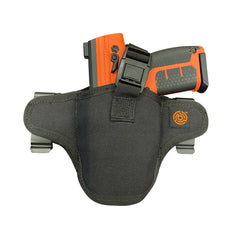
About sensible safety equipment - at Byrna, we make some excellent options for families who want protection without firearms. Our less-lethal defense products are legal across all 50 states, and they need zero background checks. Our patented pull-pierce CO2 technology means our products are ready immediately whenever you might need them. We also manufacture pistols, rifles, and even armored backpacks that tens of thousands of satisfied customers already count on for family protection. You can browse our entire product line and read customer feedback at Byrna.com.