US
US CA
CA LE
LE


 Compare Rifles


Laws around mobile living spaces are very confusing for self-defense. Some states will extend full Castle Doctrine protection to your RV or van without any questions at all, and other states are going to make you prove that it's your permanent residence before they'll protect you. A handful of states won't give you any legal protections just because you're inside a vehicle when something happens. Defense tools complicate this mess even more. A canister of pepper spray can be legal if you buy it in Nevada. But the concentration might be way over the legal limit if you cross the state line into California. Firearms are probably the trickiest part of this whole situation - reciprocity agreements between states don't line up cleanly, the transport laws are different depending on where you are, and what's required for permits is all over the place from state to state. A responsible gun owner could face felony charges just because they didn't know about some obscure local regulation.
Anyone who travels frequently is looking at a double problem - these laws are such a mess. Mobile dwellers face physical threats in unfamiliar areas, and most of them have no clue about what self-defense options are actually legal for them to use. Even worse, criminal charges could come from just possessing something that was legal when they crossed the last state line. Anyone who spends time on the road needs reliable, up-to-date information about what the law actually permits for carrying defense tools across state lines in 2025!
Here's what you'll have to know about protecting yourself on the road!
Table of Contents
Laws Are Different in Each State
Van life and RV living mean you'll cross state lines a lot more than homeowners who stay put in one place. Self-defense laws get pretty complicated when you're on the move like this, mostly because each state controls the writing of its own laws. A self-defense item that's legal in one state can land you in trouble as soon as you roll across the border into another.
Texas and California show just how different pepper spray laws can be across state lines. Texas doesn't restrict pepper spray much at all - you can carry whatever size canister you want, and the formula strength doesn't matter either. California has gone in the opposite direction. The state puts a hard limit of 2.5 ounces on pepper spray containers, and some of the formulas are banned outright. Traveling with pepper spray from one state to another means you'll have to look up what the laws are in each place you pass through. Getting pulled over and telling an officer that you didn't know about the restrictions won't help you much.

Defense tools like stun guns make matters even harder to understand. Stun guns are legal to carry in some states with no permit at all. Other states have banned them completely. Massachusetts is one of the strictest states in the entire country for self-defense products. Pepper spray that's perfectly legal in Arizona could get you arrested there, mostly because you have to have a firearm identification card just to own it in Massachusetts.
Van dwellers learn this lesson the hard way more times than I'd like to count. Crossing state lines with a defense item that's legal in one place can land you in some big legal problems as soon as you reach another state. One traveler left Florida with a kubaton attached to their keychain - it seemed harmless enough. A traffic stop in New York revealed that particular item falls under weapon laws that they had no clue existed.
The hardest part about all of this is that you have to remember to look up these laws before every trip you take. Cross-country travelers run into this all of the time - you might pass through four or five different states in just one week on the road, and each state has its own laws about what self-defense tools you can legally carry, and each one expects you to follow them as soon as you cross over the state line.
Castle Laws for Your Mobile Home
Your van or RV could feel like home to you, and in most ways that matter, that's true. The law just takes a bit longer to catch up with that reality. The Castle Doctrine is what gives homeowners legal protection when they defend themselves inside their house, and a few states have started to apply that same protection to mobile dwellings as well. Not every state agrees with it, though, and some are far more restrictive about what they'll count as a legal residence.
Minnesota actually has a case that shows how courts handle this question in practice. State v. Carothers dealt with an RV owner who claimed the Castle Doctrine should apply to his vehicle. The court agreed that an RV could be covered under those same protections as long as the person was actually living in it at the time. The big factor wasn't just that a person owned the RV - it was whether they had made it into their home and went about their regular life inside of it.
How you use your vehicle is what makes this question so tough. Most states are going to treat an RV that's permanently parked with full utility hookups just like a traditional home. The laws around a van that you drive around and live out of from place to place are way less obvious. Castle Doctrine protections can change pretty dramatically based on your location. Some states will extend those protections to any vehicle you're in at the time, regardless of the type. Others only count structures that are set up as a more permanent living situation.

Each situation is a little different for your van to officially become a home, and no single answer is going to work for everyone. What the courts actually care about is if you've made it your primary residence or not. Little details can matter a whole lot in these cases - do you have your mail delivered there? Have you been parked in one location for a few weeks or months? All these small details can count quite a bit if you end up in any legal dispute.
Florida and Texas have written their self-defense statutes to include occupied vehicles as protected spaces under the law. This matters quite a bit if you live in or travel with a van or RV because it means you're legally allowed to defend yourself without having to run away or retreat first. Your vehicle gets treated just like your home in this way. Louisiana has gone in a similar direction with its legislation, and it's been especially careful to call out motorhomes and campers specifically in the language of the statute.
Other states aren't nearly as generous with these protections. New York and New Jersey are examples - they restrict the Castle Doctrine to your home, and your vehicle just doesn't get the same coverage. You can still defend yourself if something happens in your car. But the legal bar is set a little differently than it would be if you were standing inside your house.
Gun Laws Change Across State Lines
Van life and RV travel mean you cross state lines all of the time. Carrying firearms for self-defense means the legal situation can get confusing very quickly because every state has its own set of gun laws. Something that's legal in one state could land you in serious trouble just a few miles later in another.
Reciprocity agreements take care of most of the uncertainty that comes with carrying across state lines. What these agreements do is allow your concealed carry permit from one state to be recognized and accepted in another state as well. Utah and Florida issue permits that lots of other states accept, and they're especially helpful when you travel a lot. Armed travel between states gets much less confusing if you have one of these permits in your wallet.
The Firearm Owners Protection Act of 1986 is a federal law that actually gives gun owners some protection when they need to drive through states with very strict gun laws. What it does is allow you to transport firearms between two places where you're allowed to own them legally. You'll have to follow a couple of requirements to stay protected under this law. Your firearm has to be unloaded and locked inside a container that you can't reach from the driver's seat. You'll have to drive straight through the state with the strict laws and not make unnecessary stops along the way. Gas stations and food stops are okay. But anything past that could put you outside of the protection of the law.

Storage requirements for firearms during travel can be a pain to stay on top of. Different states have wildly different standards about how you have to store them. A handful of them will actually need you to store your firearms unloaded and locked up inside a container for the entire time that you're on the road. But plenty of other states don't care all that much about it. The problem comes up when you leave a constitutional carry state (a place where the laws are nonexistent), and you wind up crossing into states like New York or New Jersey that have way stricter laws.
A mistake like this could ruin your life. Felony charges are permanent, and they'll stay on your record forever. Misunderstanding which states actually accept your permit or storing your firearm the wrong way as you're transporting it across state lines could get you arrested and facing criminal charges. A criminal record will make it way harder to find decent work or get housing for years and years to come.
Papers That Protect Your Legal Rights
Legal paperwork might not be the first priority on your mind when you're living in a van or RV. But it turns out to be very important if you ever have to defend a self-defense claim in court. The terms "domicile" and "residence" have different legal meanings, even though they sound similar. This distinction on your documents could be what determines if your self-defense case holds up or falls apart. Most van and RV dwellers don't know how much weight these definitions carry until it's too late.
Domicile and residence have an important legal distinction that matters quite a bit. Your domicile is your permanent home - the place you always intend to return to when you're away. A residence is anywhere you're staying at the time, temporary or not. This distinction matters for self-defense laws if you ever need to defend yourself while in your vehicle.
Vehicle registration is the best place to start when you're setting everything up. Plenty of states will actually allow you to register your RV or van as a primary residence instead of a recreational vehicle. Your insurance paperwork should show this same status as well.

Your driver's license needs to have an up-to-date address on it, and the address should make sense for the way you're living. Plenty of full-time travelers will use a mail forwarding service or a family member's home address to set up their legal residency in one state. Some good advice is to make sure your documents match - they should all point back to the same address.
People v. Peterson shows why this distinction matters. Where Peterson actually lived became one of the biggest questions in the self-defense case. The prosecution argued that the RV was just a temporary place to stay and would mean Castle Doctrine protections wouldn't apply. Peterson's defense team pulled out the vehicle registration documents and insurance records to prove that the RV was a permanent residence. All that paperwork made the difference in showing that Peterson had every legal right to defend themselves in what was their home.
Grab copies of any utility bills if you're paying for a storage unit or mail service somewhere. Bank statements are worth including, too, if your address is printed right on them. Even membership cards work if they list where you live on them. Pile these documents together, and they paint a pretty full picture of your residence.
All this paperwork is going to work as your legal foundation. Courts review all of the details when Castle Doctrine claims come up in front of them, and you want to be able to show that your van or RV functions as your primary home. The more documentation that you can show, the stronger your position will be if you ever need to make that case.
Protect Yourself and Your Family
You should get legal advice before you travel - it can save you from a serious mistake that could stick with you for a long time. Laws aren't set in stone either - they get revised and updated pretty regularly, and it's on you to keep up with any of the changes. Plenty of other travelers face these same questions, too, and most of them manage just fine because they do their homework and plan ahead with a level head.

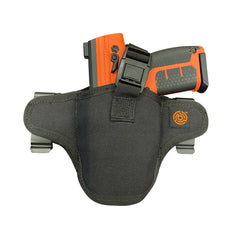
Byrna could be worth a look for a self-defense option that makes the legal side of it easier. Our less-lethal products are actually legal in all 50 states, and that means you don't have to worry about researching different laws each time you cross a state line. Background checks aren't needed either, and our patented pull-pierce CO2 system gets you ready to respond in just a few seconds if you have to. We make CO2 pistols, rifles and even armored Ballistipac backpacks for travelers who want that extra layer of protection as they're on the move.
At Byrna.com, we have our full lineup along with reviews from tens of thousands of customers who already trust our products to protect their families out on the road. Check out our store today!