US
US CA
CA LE
LE


 Compare Rifles


When you need protection, you need it fast - not weeks later after you've filled out a mountain of paperwork. Maybe you just moved to a new area, and you don't feel safe in your neighborhood yet, or maybe you're going through a messy breakup, and you need a way to protect yourself fast. In either case, a 10-day waiting period and a stack of federal forms aren't making your job any easier. Buying a firearm means background checks, permit applications and waiting periods that can stretch out for weeks or longer, depending on your state.
Pepper spray gives you about 10 to 15 feet of range, and it happens to be legal in all 50 states. Our Byrna launchers extend your reach to 60 feet, and they can fire off kinetic rounds and chemical projectiles. Modern air guns have evolved way past the BB guns we remember from childhood, and they actually work as legitimate deterrents. Strike tools are small enough to carry in your pocket, and that makes them perfect when distance isn't on your side and you need something for close-range defense. One big advantage that all five of these tools share is that they don't need background checks at all, and that means you can buy them on the spot from retailers just about anywhere.
Let's talk about these accessible self-defense tools you can get today!
Table of Contents
What You Should Know About Pepper Spray
Pepper spray relies on oleoresin capsicum as its active ingredient, and that's the compound that stops an attacker. Right when it touches a person, it causes an intense burning feeling in their eyes and all over their exposed skin. They'll be temporarily blinded, and they won't be able to breathe right at all - it's extremely hard to catch your breath after exposure. It'll last between 30 and 45 minutes and should give you more than enough time to get yourself away from the situation and call the police for help.
Police departments all over the country have been studying how well pepper spray actually works in confrontations, and the results back up what law enforcement officers already know from experience - it stops most attackers in their tracks without causing any permanent damage. That said, it's only going to work if you actually know how to use it correctly. Wind direction is a big factor that a lot of buyers don't think about until after they've already bought their first canister. Spray into the wind at the wrong angle, and you might wind up taking yourself down instead of stopping the person who's coming at you.
A lot of users get some of this spray on themselves by accident, and it's especially common during your first few practice sessions or when you're in a high-stress situation, and the adrenaline is pumping. Once that burning feeling kicks in, it doesn't matter who the intended target was supposed to be.

Pepper spray laws are different in every state, and some of them can be pretty restrictive depending on where you live. New York City caps the maximum strength that you can legally carry. Other states limit the canister size instead. Make sure to check your local laws first - you don't want to wind up carrying something illegal in your area.
How the spray comes out of the canister matters when you're working with one of these products. Stream patterns are going to give you the best range, and they perform much better in windy conditions. Fog patterns will cover a much wider area, but they also have a higher chance of blowing back toward you ( definitely not what you want). Gel formulas are probably the safest option if you're worried about the blowback - they stick directly to the attacker's skin, and they're much less likely to drift back in your direction.
Most canisters reach between 10 and 15 feet. When you're standing in a store aisle looking at options, that sounds like plenty of distance. An aggressive person can close that gap in about 1 or 2 seconds, though. For more space between yourself and a possible threat, you have some other self-defense options out there that work from much farther away.
Air Guns and Byrna Launchers for Defense
Projectile tools are going to give you a much better effective range than pepper spray and other close-range defensive options. Air guns have come a pretty long way from those old BB guns that kids used to shoot at cans in the backyard. Modern air guns pack a decent amount of stopping power and make them an actually viable option in a self-defense situation.
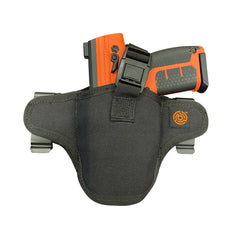
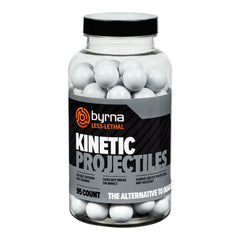
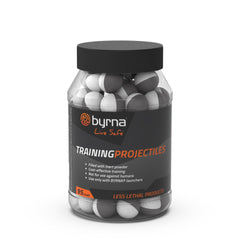
Our Byrna launchers are a great example of just how far this technology has advanced. The rounds from these launchers can travel as far as 60 feet, and that's quite impressive for a less-lethal device. Some of the rounds are hard kinetic projectiles, and they're meant to hit hard and deliver a strong hit on contact. Other rounds work a bit differently - they break open when they hit the target and then release a cloud of chemical irritants. Having 60 feet of distance between you and a possible threat is a big tactical benefit. It buys you extra time to size up the situation and respond, and it maintains a much safer distance between you and whatever danger could be heading your way.
Examples back this up. A woman in Florida used her Byrna launcher to stop an intruder who was breaking into her home. Another case involved a carjacking that was stopped with a CO2-powered air pistol. The would-be attacker backed off the second he saw what looked like an actual gun.

How these tools look actually plays a large role in how helpful they can be. When an attacker sees what looks like an actual firearm, they're going to stop and think about continuing their attack. A small pepper spray canister just doesn't create that same second of doubt. Even a short hesitation could be the time that you'll have to get away or find help.
The legal side of owning these tools changes quite a bit depending on where you live. Some states actually treat higher-powered air guns just like they treat actual firearms, and that means the same legal paperwork and restrictions apply to them. Other states take a different strategy and impose measures like mandatory orange tips, or they'll set some limits on how much force your launcher can produce. You should spend some time figuring out what the exact laws are in your state or local area before you buy.
You also need to account for the training time needed. Hitting your target when you're pumped full of adrenaline takes practice - plenty of it. Adrenaline makes your hands shake and throws off where you're shooting in ways that just won't show up during a calm afternoon at the range. It's a much bigger time investment compared to just buying a can of pepper spray and hoping that you never need to use it.
These projectiles work really well as a middle-ground option for most situations. They're more capable than close-range defense tools. But they're not quite at the level of true long-distance weapons.
Close Range Tools for Personal Defense
Close-range defense tools work a little differently than the other options on this list. These are close-range defense items, and you'll be in direct physical contact with an attacker as you use them. Your goal is to strike at pressure points and other sensitive areas on the body, and the benefit is that you don't need tremendous force behind every strike for it to work. A well-placed hit to a vulnerable area can stop a person pretty fast if you're not all that strong.
Tactical pens look just like normal writing instruments. But they're made from aircraft-grade materials that make them very strong and tough. Clipping one to your shirt or tossing it in your pocket won't draw any attention because it looks just like a normal pen to everyone around you. Kubotans are small keychain tools that take every bit of your striking force and focus it down into a single, concentrated point as you jab or hit with one. Expandable batons work differently - they extend out with a quick flick of your wrist and give you a lot more reach than just your arm would.

A lot of these tools actually take their techniques straight from martial arts and police training programs. Police academies spend a fair amount of time teaching officers the exact places to strike with a baton when they need to control a person who's becoming dangerous. Personal defense tools work on that same principle. Targeting nerve clusters or bony areas on an attacker's body means you don't need much force behind your strike to make it hurt enough that it stops them.
Every single one of these tools has the same big drawback. Each one is going to need at least a little bit of training and some physical ability if you actually want to use them when it counts. A tactical pen won't help you much if you don't know where to aim it or how to grip it properly when your adrenaline starts kicking in. None of these are just push-a-button tools that do the work on their own.
Distance matters quite a bit when you're picking between your options. Strike-based weapons like tactical pens and kubotan keychains only work when you reach your attacker, and that means you're going to be dangerously close to them. A tactical pen does have one benefit here - it's discreet, so nobody will know you're carrying a weapon until it's time to use it. When defending yourself at close range, though, that benefit is already gone.
Plenty of people have successfully escaped dangerous situations with these products, and the courts usually see them as justified force when there's a legitimate threat. Personal alarms serve their own role (they make plenty of noise to get attention), but pepper spray and tear gas fill a different role.
How Personal Alarms Keep You Safe
Personal alarms work on a pretty basic principle, and they work very well. Criminals want to stay hidden and escape as fast as possible without any witnesses around to see what's going on. A loud alarm at 120+ decibels makes it nearly impossible for them to go unnoticed and grabs attention from everyone in the area. Once that alarm starts blaring, most criminals are going to take off instead of standing around where others can see them or recognize who they are.
A handful of college campuses have distributed personal alarms to their students and then tracked the results to see what would happen. The assault rates in those areas went down after the alarms were handed out, and it's a big finding. This actually makes plenty of sense when you consider where most campus assaults take place - parking lots and walkways, where you'll usually find at least a few other bystanders around who might hear an alarm go off.

Personal alarms are only going to work when other bystanders are around to hear them go off. Places like parking garages, busy sidewalks or any street with decent foot traffic are perfect places for this type of device to work well. The loud noise can be enough to make an attacker think twice about following through with an attack. In isolated areas, though (like empty trails, deserted parking lots or anywhere else where help isn't within earshot), the alarm is going to be useless since there's nobody around to respond to it. It's worth taking an honest look at where you actually spend most of your time and whether an alarm makes sense for those locations.
Some of the newer models will send your GPS coordinates straight to your emergency contacts, and some of them can even dial 911 automatically without you doing anything. This extra layer of security is worth having because help can be notified and be on the way even if you're not able to physically grab your phone or make a call yourself.
Personal alarms are a tool. But they work best as one part of your safety strategy. They're not magic, and they won't solve everything on their own. What makes them work well is combining them with other defensive options that fit into your life and your day-to-day schedule. Heading out through busy parking lots or crowded city streets at night makes an alarm one of your better options. Remote areas are a different situation - you'll probably want to use other methods and tools that give you more options in an isolated environment.
Protect Yourself and Your Family
Legal protection tools should be available right when you actually need them - no waiting for weeks on end, and definitely no mountains of paperwork just to get protection. Your personal safety matters, and you deserve access without the red tape or pointless delays standing in your way. What matters most is finding something that actually fits into your day-to-day life, and then you'll have to learn how to use it the way you should.
A tool won't help you at all if you've never practiced with it or don't know when you should actually use it. Practice matters, and you'll have to be comfortable with whatever option you pick. Awareness of what's going on around you, combined with sound judgment in the heat of the situation, will always be your best defense. Smart decisions, strong boundaries and a backup plan all work together so you can stay safe. Tools like these are easy to buy, and they give you that backup without the messy legal problems that come along with firearms.
A reliable self-defense tool on your person is a great feeling, especially when it's legal to carry it everywhere in the country without any permits or background checks to worry about. You'll still want to review your local laws and get some training to be prepared. Your confidence level with it matters just as much as which tool you choose, so make sure to practice and get comfortable before you ever need to use it.

Byrna has a full lineup of less-lethal defense products that are easy to use and work well when you need them. Byrna uses a patented pull-pierce CO2 system that loads fast and doesn't need any fussy setup. The product range includes pistols, rifles and even armored ballistipac backpacks for extra protection. Tens of thousands of customers have trusted Byrna to help them stay safer, and the products give customers peace of mind.