US
US CA
CA LE
LE


 Compare Rifles


A penetration depth of 13.5 inches is too much for defensive ammunition. Most interior walls in an average home only measure about 4.5 inches thick. A single round can go through three or four walls before it finally stops. Adrenaline makes everyone's hands shake during a home invasion, even experienced shooters who can usually place their shots right where they want them. Because of that stress response, anyone else inside the house could be in danger from over-penetration!
Less lethal options give you a way to stop an intruder without worrying about all these risks at once. Pepper ball systems have become pretty popular in the home defense market, and the reasons for this make sense. Every projectile gives you a physical hit and a burst of chemical irritant, and this combination stops an attacker in just a few seconds. The projectiles break apart on contact instead of passing through walls or other barriers. Law enforcement has relied on pepper ball technology for more than 25 years now (big departments like the NYPD and Chicago PD depend on it), so homeowners can get access to the same proven protection without always worrying about bullets traveling through walls and hurting anyone in another room.
Let's talk about why pepper balls outperform other less lethal options for safe home defense!
Table of Contents
When Bullets Travel Through Your Home
Most standard ammunition has a big problem with over-penetration. Standard handgun and rifle rounds can go right through multiple layers of drywall, and they barely slow down at all. A single bullet might pass through four or five interior walls before it finally stops - which means that it could reach the bedrooms on the other side of your house pretty easily, or worse, travel into a neighbor's home.
Once you actually map this out on your own floor plan, it starts to get pretty concerning. Your kids could be asleep down the hall from the most likely entry point. Your spouse could be in a different room altogether. And even if you manage to hit your target dead on, that bullet is still going to travel somewhere after it hits.

Adrenaline is going to make this whole situation way worse. When an intruder breaks into your home, your body reacts in ways you can't control - shaky hands, pounding heart and the fine motor control that you normally have just disappears. Trained shooters lose most of their accuracy under this much stress. Any round that misses its target is now flying through your house, and you have no idea where it's going to end up.
Real incidents have backed this up. Residents have actually been injured in rooms that were nowhere near where the gun was fired. Bullets will pass right through the floors and the walls, and we've seen family members get hit on different levels of the same home.
The best option would be something that stops an intruder without creating all kinds of new problems. It needs to have enough force to actually stop the person. But it can't travel through the walls and put everyone else in your home in danger.
Non-Lethal Ammunition Options for Your Home
Most homeowners want to be able to protect themselves and their family without having to resort to lethal force, and thankfully, you can find quite a few decent options on the market that won't kill. Each product works a little differently, and they all have their own pros and cons that are worth weighing before you decide.
Bean bag rounds are small fabric pouches that get filled with lead shot or other types of heavy material. Once they leave the barrel of your shotgun, they deliver a pretty heavy amount of blunt force when they hit - enough to cause pain and knock the wind out of whoever is on the receiving end. The goal with these rounds is to stop an intruder in their tracks by delivering pain and heavy force, all without actually piercing through the skin like a traditional round would. Most bean bag rounds on the market are made in 12-gauge format, so they're compatible with just about any standard shotgun you probably already own.
Frangible ammunition works differently. Instead of lead or copper, these rounds are built from compressed metal powder, and when they hit something hard (like a concrete wall or steel target), they break apart into small fragments instead of bouncing back or staying whole. Ranges and training places adopted them early on for close-quarters practice where standard ammunition would create real safety problems. After they hit, those fragments lose their energy pretty quickly, and that means they won't go through multiple walls the way traditional rounds can.

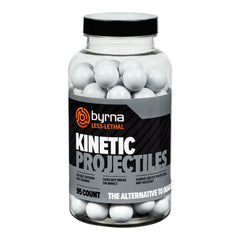
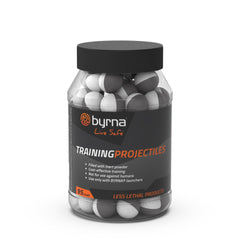
Pepper balls are little round capsules with a powdered irritant packed inside them, and they break apart when they make contact with a person or a hard surface. You fire these from air-powered guns or CO2 markers (which work just like paintball guns if you've ever used one). Once the shell cracks open, all that pepper powder releases into the air as a cloud, and it makes your eyes water up pretty fast and also makes it hard to breathe. Anyone exposed to this powder is going to have a hard time keeping their eyes open, and the coughing usually starts in seconds. Most pepper ball systems are designed to work with paintball-style guns, though some manufacturers make dedicated launchers just for these rounds.
Your best bet is to go with the type that will work for your own situation when an intruder breaks in, and you have to defend your home.
The Stopping Power of Pepper Balls
Most pepper ball rounds come in 68 caliber, and you should fire them from about 10 to 30 feet away. This distance actually works out well for indoor home defense scenarios since the hallways and rooms in most houses will put you at close range with an intruder anyway.
When one of these rounds hits a person, two separate effects actually happen at once. First, the ball itself packs a pretty sharp sting right on contact. Then, almost right away, the capsaicin powder inside spreads out and goes to work on them, and it only takes a few seconds before their eyes want to stay shut, and it becomes way harder for them to breathe normally.

These two effects work well together and create a perfect situation for home defense. The fast stopping power is there if you need it, and at the same time, you don't have to stress about rounds going through your walls and into other rooms where your family might be. The projectiles are built to fragment on contact, and they'll break apart when they hit a target rather than pass through drywall or other surfaces.
The effects last long enough for you to get your family to safety and make that 911 call. Within about 30 to 45 minutes after a person is away from the spray, they will recover - it's enough time to act and protect yourself, and you won't have to worry that you'll cause any permanent harm to anyone in your home.
These rounds won't go through the walls or penetrate through a person's body, and that's a big benefit for home defense scenarios. You're able to protect yourself, and you don't have to always worry about over-penetration problems or what might happen if you miss your target completely. Even if your shot connects, the round won't pass through and hit something else on the other side.
Laws and Safety Rules You Need
The laws around self-defense tools like pepper spray and stun guns aren't uniform across the country, and what's allowed varies by where you are. Every state writes its own laws for what you can own and carry around, and then cities usually add their own restrictions on top of state law. A can of pepper spray that's legal in one place might not be okay to carry in the next town over. Stun guns follow the same patchwork - they're legal in some places, banned altogether in others.
Proportional force is probably the biggest legal concept that you'll have to know about in self-defense. Whatever you do to defend yourself has to match up with the threat you're actually up against. It'll give you a lot more flexibility here because you can protect yourself without crossing into deadly force territory. That flexibility matters if you ever have to explain your actions to law enforcement or worse, defend what you did in front of a judge.
Storage laws are worth a quick look based on where you live. Your state or county might expect you to keep these items locked up when kids are in the house, and it doesn't matter if they live with you full-time or just visit on weekends. The industry labels these "less-lethal" instead of " non-lethal" for a real reason - if anyone mishandles them, they'd cause some pretty bad injuries.

Any defensive product or technique needs to be in direct response to an immediate threat, either against you or another person nearby. Once the incident is over, one of the biggest steps you can take is to document everything that happened. Report it as soon as you can and write down all of the details that you remember, as it's all still fresh in your mind.
Training is where the practical skills and legal protection of home defense come together. Taking the time to learn how to take care of these tools makes you far less likely to mess something up in a way that hurts a person when it wasn't needed or puts you in legal hot water down the line. Next up, we'll get into the types of training that work well for pepper balls and other defensive tools like them.
How to Use Your Pepper Ball Launcher
Pepper ball launchers work differently from other firearms, so you can't aim them the same way either. The projectiles don't travel in a straight line like bullets do - they arc through the air instead. You'll need to adjust for that curved path each time you aim.
These launchers have a limited range. Pepper ball launchers work best when you're between 10 and 30 feet away from your target. Past that 30-foot mark, your accuracy is going to drop off pretty fast, and the projectile also starts to lose velocity. If you don't have enough speed behind it, the ball won't break open the way it should when it makes contact, and that defeats the whole point of having one.
Home defense with a pepper ball launcher takes practice if you want to count on it in a bad situation. Head out to a safe outdoor area where you can fire off a few rounds and watch how the pepper cloud spreads after each ball breaks apart. Launchers vary quite a bit in terms of accuracy and feel, and different types of pepper balls are going to create slightly different dispersion patterns when they hit something.

Your home's layout is actually one of the biggest factors if you're planning to use pepper balls indoors. Most homes have HVAC systems that cycle air throughout the entire house, and the pepper cloud can travel through your vents and wind up in rooms you never intended. Small rooms like bathrooms or closets present their own challenges because there's almost nowhere for the irritant to go when you fire a round. In a confined space like that, the pepper powder just hangs in the air with no way to spread out, and it can come right back at you instead of staying where you aimed it.
Your launcher needs regular maintenance so it keeps working the way it should, just like any other tool you depend on. The seals and O-rings are worth inspecting from time to time to confirm they haven't degraded or worn out. Pepper balls also have a shelf life - rounds that have been sitting around for too long might not break the way they should on impact. The capsaicin formula inside them loses its potency as time goes on.
One of the biggest misconceptions about pepper balls is that a single shot will drop an intruder right away. Everyone reacts to the irritant at a different pace, and the variation from one person to another can be large. Some will feel the effects almost right away. Others could take quite a bit longer to feel the full effects. Always have a backup plan ready for those situations where your first couple of shots don't have the effect you planned for. Keep a backup plan in mind and know where your escape routes are before anything happens. Your priority is to create enough time and distance to get your family safely away from danger. Training with your launcher before an emergency helps you stay much calmer and make better decisions when the situation gets chaotic and stressful.
Protect Yourself and Your Family
Home defense is one situation where you'll have to stop an intruder and also make sure your family stays safe. A normal bullet can't tell the difference between a bad guy and your kid who's asleep just two rooms over - it's going to blow through a few walls and barely slow down at all. Pepper balls work differently because they release an irritant that fills the air instead of passing through walls and maybe hitting anyone on the other side.
The chemical irritant works on everyone who breathes it in - size doesn't matter, pain tolerance doesn't matter. The cloud spreads out after they hit, too, and it helps when you're off by a bit (and your hands will shake and your heart will pound during an emergency). Each unit holds multiple rounds as well, so one missed shot doesn't leave you defenseless. The effects are temporary, too - they last just long enough to get your family to a safe room or to get 911 on the phone. With these features, pepper balls make real sense for most homes.
Every state has different laws about these products, so verify what's allowed in your area before you buy one. Training matters too - even with less-lethal options that don't need the same skill level as firearms, practice helps you respond faster and make better decisions when an emergency happens. For family protection, choose products that make your household safer without creating new problems inside your own home.

At Byrna.com, we've become one of the top places for self-defense options that make sense for everyday families. Our less-lethal products are legal in every state, and you won't have to worry about any background checks or waiting periods if you order. The CO2 system we use is patented and works on a pull-pierce mechanism, so it's ready to go when you need it. We have quite a few options too - pistols, rifles, and we even make armored backpacks for extra protection. Tens of thousands of customers have reviewed our products, and Byrna.com is worth a visit if you want to see why so many families trust us for their safety needs.